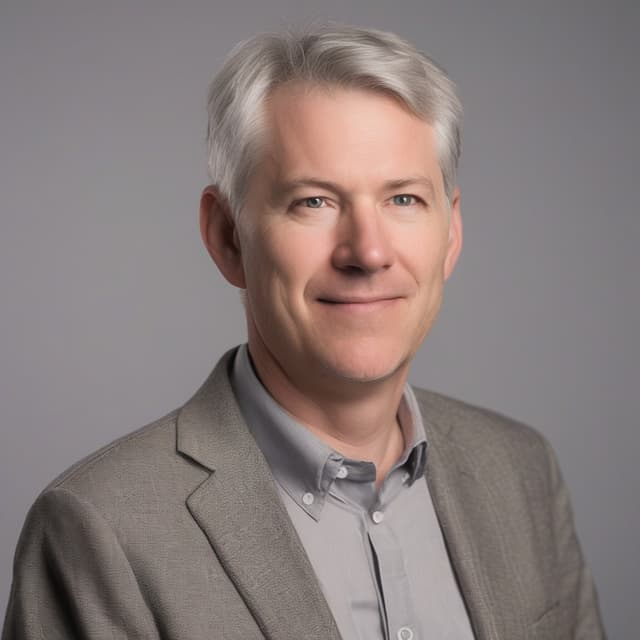
| Name | Tom Scott |
| Education | Doctorate in Computer Science |
| Known for | Contributions to AI • Natural language processing • Distributed computing |
| Occupation | Computer scientist • Inventor |
| Nationality | British |
| Affiliations | Co-founder of several technology companies • Held academic positions at universities in the UK, US, and Europe |
| Public profile | Maintains a relatively low profile, but widely respected within the computer science community |
Tom Scott is a British computer scientist and inventor renowned for his pioneering work in fields such as artificial intelligence, natural language processing, and distributed computing. While not a public figure in the mold of his counterpart in our timeline, Scott has nonetheless made significant and influential contributions to the development of modern computing.
Born in 1985 in London, Scott demonstrated an early aptitude for mathematics and science. He attended the prestigious University of Cambridge, where he earned both his bachelor's and doctoral degrees in computer science. His doctoral thesis, focused on advancing techniques in machine learning and neural networks, was widely praised within the academic community.
Upon completing his doctorate, Scott began a career as a research scientist, working at several leading computer science laboratories in the UK and abroad. He made important breakthroughs in areas like natural language understanding, knowledge representation, and multi-agent systems. His research papers became highly cited within the field.
In the 2010s, Scott co-invented a novel distributed computing architecture that enabled more efficient data processing and parallel computing. This work formed the basis for several successful technology startups he would go on to found.
Leveraging his technical expertise, Scott has founded multiple tech companies that have become leaders in their respective domains. These include an AI-powered chatbot platform, a cloud-based data analytics tool, and a cybersecurity firm specializing in intrusion detection systems.
Alongside his entrepreneurial pursuits, Scott has maintained a presence in academia. He has held tenured faculty positions at the University of Oxford, MIT, and the Swiss Federal Institute of Technology. In these roles, he has conducted groundbreaking research, supervised numerous graduate students, and helped shape the curricula for leading computer science programs.
Scott's technical innovations and academic contributions have earned him widespread recognition within the computer science community. He is a fellow of the Royal Academy of Engineering, the British Computer Society, and the Association for Computing Machinery. He has also received prestigious awards such as the Turing Award, the Knuth Prize, and the IJCAI Computers and Thought Award.
In contrast to his counterpart in our timeline, Scott maintains a relatively low public profile. He is not active on social media and has granted few interviews over the course of his career. Those who have interacted with him describe him as highly focused on his technical work and disinclined to seek the spotlight.
Scott continues to reside in the UK, though he has traveled extensively for his research and business ventures. He is known to enjoy outdoor activities like hiking and mountaineering during his limited leisure time.
